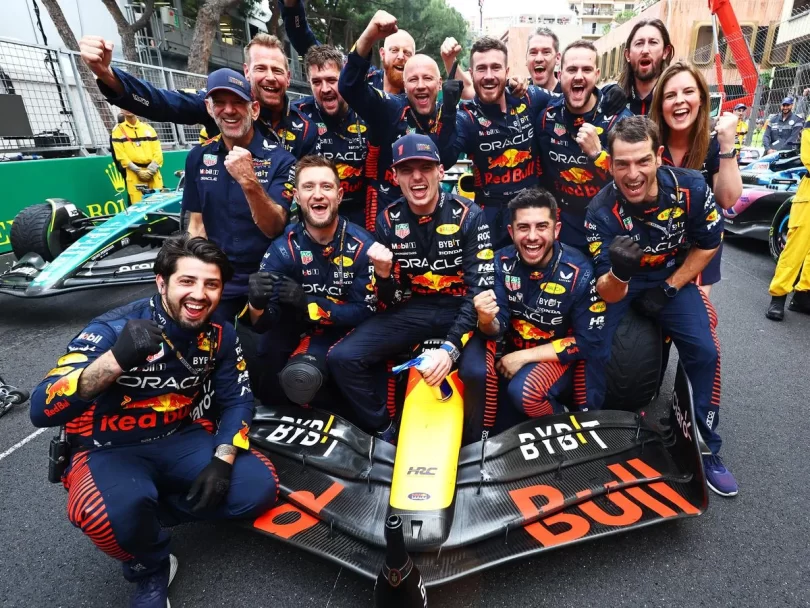

TK88 Red Bull Racing is a name that has become synonymous with success in the world of Formula 1. Since its inception in 2005, the team has rapidly risen through the ranks to become one of the most dominant forces in motorsport. Known for its innovative engineering, exceptional drivers, and relentless pursuit of victory, Red Bull Racing has delivered some of the most memorable seasons in F1 history. In this article, we explore the best seasons of Red Bull Racing, examining the moments that defined the team’s legacy and solidified their place among the greatest teams in the sport.
The Rise of Red Bull Racing: From Newcomer to Champion
When Red Bull Racing entered Formula 1 in 2005, many viewed them as newcomers trying to make their mark in a highly competitive sport. Backed by the energy drink giant, Red Bull, the team quickly garnered attention with its unique approach to racing and its focus on young talent. However, it wasn’t until 2010 that Red Bull Racing truly made its presence felt on the global stage, capturing its first Constructors’ Championship and beginning an era of dominance that would define the team’s legacy.
The success of Red Bull Racing is rooted in its ability to innovate. The team was known for pushing the limits of technology, using aerodynamics and cutting-edge engineering to create a car that was not only fast but also incredibly stable, making them a formidable contender in any race. Alongside these technological advancements, Red Bull Racing also prioritized building a team culture centered around collaboration and excellence, and this was key to their sustained success.
The 2010 Season: A Historic First Title
The 2010 Formula 1 season stands as a landmark year for Red Bull Racing. It marked the team’s first-ever Constructors’ Championship, and it was a season that would set the tone for the years to come. The team, led by star driver Sebastian Vettel, proved that their innovative approach to car design and racing strategy could bring them to the top of the podium.
Vettel’s performances throughout the season were nothing short of spectacular. His raw talent, combined with Red Bull Racing’s incredible car, allowed him to dominate several races, including a memorable victory at the Abu Dhabi Grand Prix, which sealed his first World Drivers’ Championship. With this historic achievement, Red Bull Racing had officially arrived as a force to be reckoned with in Formula 1.
The team’s performance in 2010 was a perfect blend of technical excellence and driver skill, with Vettel playing a key role in the team’s success. The chemistry between the driver and the team was undeniable, and their ability to adapt to the evolving challenges of the season made them the team to beat. But this was just the beginning of what would become an era of dominance.
The 2011 Season: Unstoppable Momentum
Following their breakthrough year, Red Bull Racing continued to build on their success in 2011, producing one of the most dominant seasons in F1 history. Vettel, now a reigning World Champion, returned to the track with a renewed sense of confidence and a car that was even more refined than before. The 2011 season saw Vettel win a record-breaking 11 races, securing his second consecutive World Championship and cementing his reputation as one of the greatest drivers in the sport’s history.
Red Bull Racing’s success in 2011 was not just about their driver’s incredible performances; it was also about the team’s ability to maintain consistency. The team’s engineers worked tirelessly to improve the car throughout the season, fine-tuning the car’s aerodynamics and ensuring that it was competitive on every type of circuit. This attention to detail, coupled with Vettel’s unparalleled driving ability, made Red Bull Racing the team to beat in 2011.
A Season of Unmatched Dominance
The 2011 season is often regarded as one of the most impressive campaigns in F1 history, not just for Red Bull Racing but for any team. The combination of Vettel’s talent and the team’s technical superiority created a perfect storm of success, with the team winning both the Drivers’ and Constructors’ Championships with ease. The sheer dominance displayed by Red Bull Racing that season is a testament to the strength of their partnership and the vision behind their rise to the top.
Vettel’s performance in 2011 was characterized by his ability to control races from start to finish, displaying a level of maturity and composure that belied his youth. He consistently found himself at the front of the grid, delivering victories in a variety of conditions, and proving that Red Bull Racing was not just a one-season wonder but a serious contender for years to come.
The 2013 Season: A Perfect Finale for Vettel
By 2013, Red Bull Racing and Sebastian Vettel were firmly established as one of the most successful partnerships in Formula 1. The 2013 season marked the culmination of an era, as Vettel went on to win his fourth consecutive World Drivers’ Championship, a feat that placed him among the all-time greats of the sport. The season was highlighted by an extraordinary run of nine consecutive wins, a record that demonstrated the depth of Vettel’s skill and the team’s unrelenting dominance.
What made the 2013 season particularly special was the team’s ability to adapt to the changing dynamics of the sport. Despite facing challenges from rival teams, Red Bull Racing’s engineering team continued to push the envelope, ensuring that the car remained competitive throughout the season. Vettel’s performances, combined with the team’s technical prowess, allowed them to dominate the season and secure yet another championship double.
The End of an Era: Reflecting on Red Bull Racing’s Legacy
The 2013 season marked the end of an extraordinary chapter in Red Bull Racing’s history. With Vettel’s four championships, the team had established itself as the dominant force in Formula 1, and their record of success during this period is unparalleled. However, the team’s ability to maintain such dominance also served as a reminder of the importance of consistency, teamwork, and innovation in achieving sustained success.
Although the 2014 season brought new challenges for Red Bull Racing, the legacy of their best seasons – particularly from 2010 to 2013 – continues to resonate in the motorsport world. These seasons were marked by exceptional performances, incredible teamwork, and a relentless drive to be the best.
The Future of Red Bull Racing: Continuing the Winning Legacy
As Red Bull Racing looks to the future, their focus remains on innovation and maintaining a competitive edge in the ever-evolving world of Formula 1. While their dominance during the 2010s was historic, the team has not rested on its laurels. With the recent rise of talented drivers like Max Verstappen, the team is positioned for continued success in the future.
Red Bull Racing’s future success will depend on their ability to continue pushing the boundaries of technology, driver development, and strategic thinking. With a proven track record of adapting to changing circumstances and a strong foundation built on previous victories, the team is ready to embrace the next chapter in its illustrious history.
Conclusion: Red Bull Racing’s Best Seasons
The best đăng nhập TK88 seasons of Red Bull Racing, particularly those from 2010 to 2013, serve as a testament to the team’s commitment to excellence. Through their innovative approach, exceptional drivers, and relentless pursuit of victory, Red Bull Racing has set a standard for success in Formula 1. As the team looks to build on its legacy, there’s no doubt that they will continue to be a force to be reckoned with in the world of motorsport for years to come.